

$
Jury Verdict
$ 10 Million
Medical Malpractice
Luzerne County
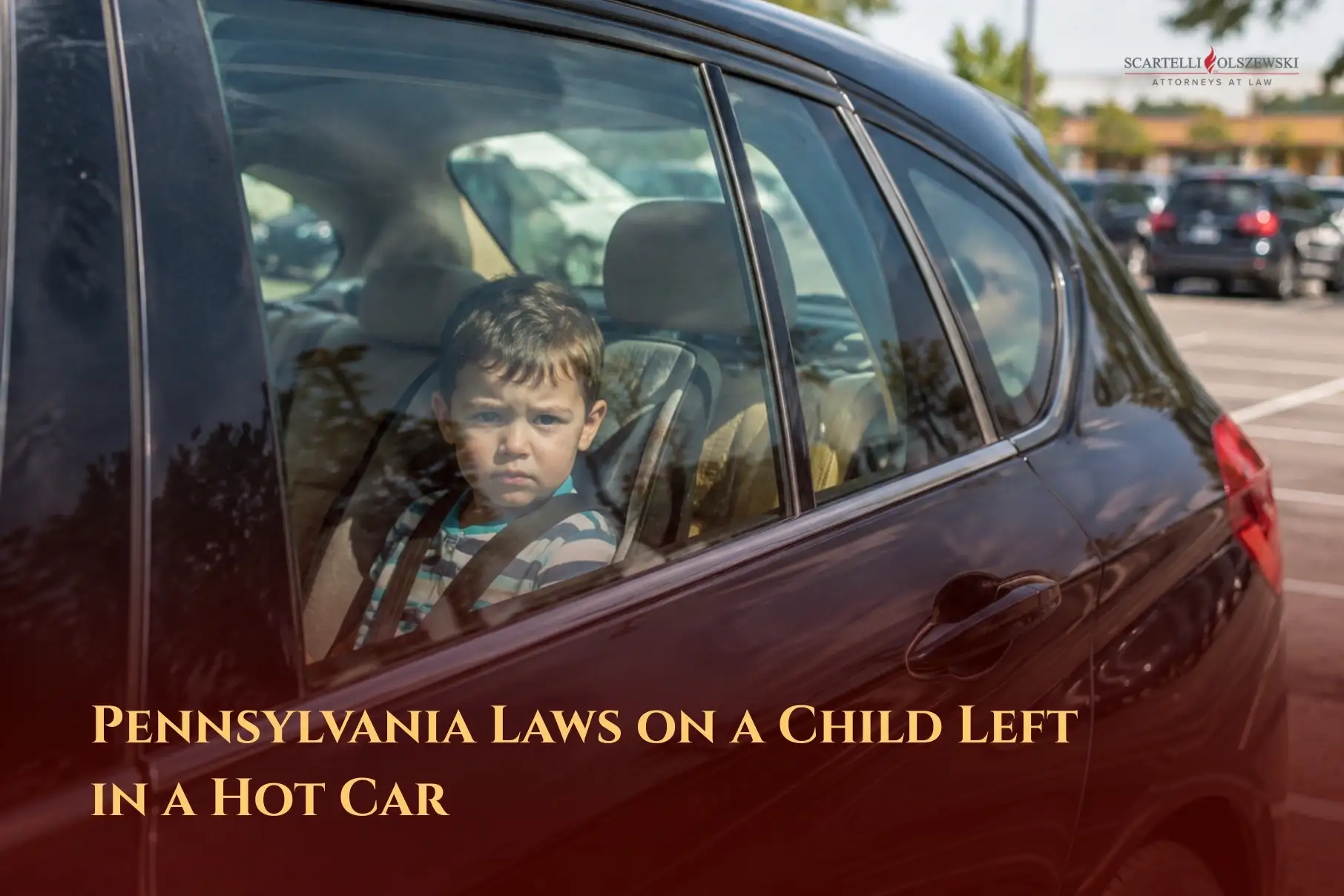
When the outside temperature is 85°F, the inside of a closed car reaches 104 degrees in 10 minutes and 114 degrees in 20. A child’s body heats up three to five times faster than an adult’s, and heatstroke can occur when outside temperatures are as low as 57℉. A shocking 53% of hot car deaths happen because a parent or caregiver forgot the child was there, according to NoHeatStroke.org.
In Pennsylvania, any incident involving a child left in a hot car or left unattended in a vehicle under these dangerous conditions is illegal. When that lapse, or a daycare’s institutional failure, causes a child to be harmed or killed, civil accountability follows. Families in Scranton, Wilkes-Barre, and across Northeastern Pennsylvania have legal rights under Pennsylvania law, and in many cases more than one party bears responsibility.
Pennsylvania’s primary statute (75 Pa.C.S. § 3701.1) covers anyone driving or in charge of a motor vehicle who permits a child under six to remain unattended while out of sight and under conditions that endanger the child’s health, safety, or welfare. The statute applies to highways, trafficways, and parking lots but does not cover private driveways. Each child left unattended is a separate offense.
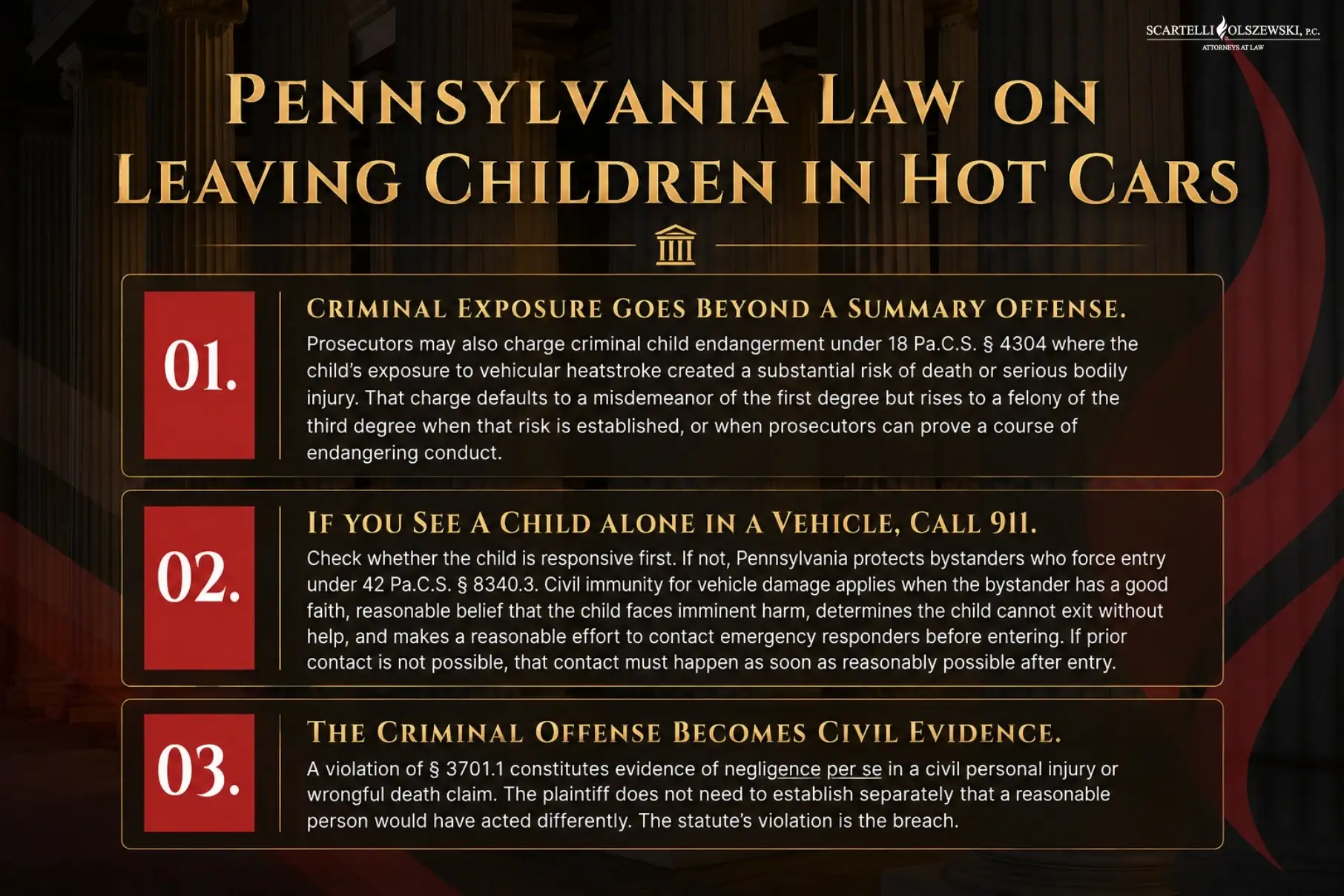
Pennsylvania civil law recognizes multiple parties who may bear liability in hot car cases.
For a breakdown of what damages are available, see our guide on types of personal injury damages in Pennsylvania.
When a daycare employee, summer camp driver, or after-school transportation provider leaves a child in a vehicle, the question goes beyond what that individual did wrong. The real question is what institutional failure allowed it to happen.
Reputable child transportation providers operate under documented protocols specifically designed to prevent this: mandatory headcounts before the vehicle moves, a second count when every child exits, and a designated staff member at the rear of the vehicle who does not leave until all children have cleared. When those protocols are skipped, undocumented, or ignored, the institutional negligence claim is substantial.
Pennsylvania DHS licensing requirements for child care facilities include transportation safety standards. A facility’s failure to implement or enforce those standards, independent of any individual employee’s conduct, supports a direct negligence claim against the institution itself.
Preserving evidence promptly can be the difference between a strong claim and a lost one. Transportation logs, head count records, incident reports, staff certifications, and surveillance footage are the evidence needed for your claim, and these materials disappear quickly if preservation is not requested immediately.

The hot car law in Pennsylvania states that a person driving or in charge of a motor vehicle commits an offense when they permit a child under six to remain unattended, out of the driver’s sight, under conditions that endanger the child’s health, safety, or welfare. Each child left unattended is a separate offense.
Yes. In Pennsylvania, a daycare is liable under the respondeat superior doctrine when an employee leaves a child in a hot car during facility operations. Direct negligence claims follow if the facility failed to maintain documented head count protocols or conduct mandatory vehicle sweeps after each run.
The statute of limitations for a hot car injury claim in Pennsylvania is two years from the date of injury. For injured minors, the period tolls to age 18, allowing filing until age 20. See our guide on statutes of limitations in Pennsylvania personal injury cases.
Yes. A child who survives vehicular heatstroke with permanent injuries has a personal injury claim in Pennsylvania for past and future medical expenses, rehabilitation costs, pain and suffering, emotional distress, and loss of future earning capacity. Neurological impairment, brain damage, organ failure, and developmental setbacks are compensable injuries under Pennsylvania law.
Pennsylvania law is clear about who is responsible when a child is left in a hot car, and so are the consequences. Whether the situation involves a babysitter or a daycare, the outcome does not have to be the end of the road for your family.
If your child was harmed, speak with someone who knows Pennsylvania law. Call the Scranton personal injury attorneys at Scartelli Olszewski, P.C. at (570) 346-2600. The consultation is free. There is no fee unless we recover compensation for your family.

Rachel D. Olszewski, an attorney at Scartelli Olszewski, P.C., is a dedicated advocate for clients who have suffered unjust harm. Following the legacy of her esteemed family members, Rachel specializes in personal injury, medical malpractice, and criminal defense. She is actively involved in professional associations and serves on the board of the Luzerne County Bar Association Charitable Foundation. Rachel is admitted to practice in Pennsylvania state courts and the U.S. District Court for the Middle District of Pennsylvania.
Linked In - https://www.linkedin.com/in/olszewskirachel/
I don't think I could have picked a better team to represent my case. My situation was unique and extremely complicated but it was handled with the utmost care and professionalism. The firm's strong and organized representation ultimately brought great results and helped reconcile a tragic event.
- Jeremy S.
Was wrongly accused of a very serious Felony 3 account and hired Peter Paul Olszewski. The entire firm of Scartelli Olszewski worked tirelessly to have the Pike County Assistant District Attorney as well as the District Magistrate Judge Dismiss the charges! Very pleased with the outcome of this Law Firm and recommend this Law Firm.
- Kerry S.Dealing with the attorneys over at Scartelli Olszewski was nothing short of satisfactory. Through the entire 4 year process we had, I was constantly kept updated and cared for. More than doing their job, they truly care for their clients which I felt off the first meeting with Melissa. Both my family and I are forever thankful for them!
- Noah T.In Pennsylvania, both texting and holding a phone while driving are strictly illegal. Texting while driving has been prohibited since...
Read MoreAll drivers in Pennsylvania must have automobile insurance (see "Automobile Insurance Requirements in Pennsylvania"). Among the required auto insurance in...
Read MoreAn airbag that ruptures does not cushion you. It fires metal fragments into the cabin at the speed of an...
Read MoreAfter an accident, who you hire matters. We've spent years fighting for families just like yours – and we're ready to fight for you.

Wilkes Barre Office (Appointment Only)
Scartelli Olszewski, P.C.
7 Public Square
Wilkes-Barre, PA 18701