







$
Jury Verdict
$ 10 Million
Medical Malpractice
Luzerne County

 Millions Recovered
Millions won for victims, including Luzerne County's largest medical malpractice verdict.
 Certified Trial Advocacy
Led by one of few female Board Certified Trial Advocates in Pennsylvania.
 Zero Upfront Cost
You don't pay a penny out of pocket, we only get paid when you do.
 Years of Experience
100+ combined years of experience in personal injury, medical malpractice, and criminal defense.
If you were injured in a Wilkes-Barre car accident, what you do in the first 72 hours can decide whether you recover the full value of your claim or fight for fair value for two years. Insurance companies move fast. Adjusters from the at-fault driver’s carrier often call within 24 hours. They are not checking on you. They are looking for a recorded statement, an early lowball release, or any inconsistency they can use later to reduce what they pay. Evidence at the scene starts disappearing before you leave the hospital.
PennDOT recorded 110,765 reportable traffic crashes statewide in 2024, with 66,950 people injured and 1,127 killed. Luzerne County contributes a meaningful share of that volume. The I-81 corridor through Wilkes-Barre, the North Cross Valley Expressway, Route 309 between Mountain Top and Dallas, and the intersections surrounding Public Square account for the highest-frequency crash locations in the county.
Scartelli Olszewski, P.C., located steps from the Luzerne County Court of Common Pleas in Wilkes-Barre, has represented injured clients across Luzerne County and Northeastern Pennsylvania since 2001. Our results include a $2.2 million tractor trailer settlement, a $1.8 million work truck injury settlement, and a $650,000 car accident settlement. The firm is led by Melissa A. Scartelli, founder, president, and Board Certified Civil Trial Advocate by the National Board of Trial Advocacy.
Call our Wilkes-Barre office at (570) 822-1400 or visit 7 Public Square, Wilkes-Barre, PA 18701 for a free, confidential case review. We are minutes from the Luzerne County Court of Common Pleas at 200 North River Street where many of our cases are filed.
Proven Results in Wilkes-Barre Car Accident Cases:
See our full case results, read what our clients have said, or meet our attorneys.
Past results do not guarantee a similar outcome. Every case is unique and the value of any claim depends on its specific facts.
Call Us Today for a Free Consultation!
(570) 822-1400Insurance companies offer fast, low settlements hoping you sign before you understand the lifetime cost of your injuries. We calculate the different types of personal injury damages that apply to your case and fight to recover every dollar.
No Cap on Compensatory Damages
Pennsylvania does not cap economic or non-economic damages in car accident cases. You can recover the full value of your losses.
After a Wilkes-Barre car accident, the steps you take in the first hours shape the strength of your claim. The actions below preserve evidence, protect your health, and prevent insurance adjusters from using gaps in your response to reduce your settlement.
Ensure immediate safety. Move vehicles out of traffic if it is safe to do so. Activate hazard lights. Check for injuries.
Call 911 without delay. Police reports filed on scene carry more weight in Luzerne County courts than reports filed days later. The on-scene report becomes a liability-establishing document.
Document the scene. Take photos and video of vehicle damage from multiple angles, road conditions, traffic signals, street signs, road markings, and any visible injuries. Dashcam footage and vehicle event data recorder (“black box”) data prove negligence when witness memory fails.
Collect witness contact information. Names, phone numbers, email addresses. In hit-and-run cases, witnesses become the anchor of your claim.
Exchange driver information only. Get the other driver’s name, license number, phone, address, insurance company, and policy number. Do not admit fault, discuss injuries, or negotiate at the scene.
Seek immediate medical evaluation. Visit an emergency department, urgent care, or your physician the day of the crash. Whiplash, traumatic brain injury, and internal injuries often have delayed symptoms. The regional Level II Trauma Center is Geisinger Wyoming Valley Medical Center in Plains Township. Wilkes-Barre General Hospital and Geisinger South Wilkes-Barre also operate 24/7 emergency departments.
Report only to your own insurance carrier. Provide facts only: accident date, location, and other driver information. Do not give a recorded statement before speaking to an attorney. Do not authorize medical record releases without counsel.
Contact Scartelli Olszewski. We manage all adjuster communications, which prevents you from being recorded without your consent or misquoted later.
Preserve physical evidence. Do not repair your vehicle or clean the interior until you take photographs of all damage and areas of impact. Photographs and repair estimates establish baseline damages before anything is touched.
Avoid social media entirely. Insurance companies archive every post about your crash, injury, treatment, or recovery. A single “feeling better” post can justify a claim denial. There are several other things to avoid doing after a crash that can hurt your case. Assume insurers are watching.
From minute one, we handle the adjuster. Stop taking calls from the at-fault carrier. Let us field every question on your behalf so nothing you say can be twisted later. Call (570) 822-1400 for a free case review.
Nothing upfront. We work on a contingency fee basis under Pa.R.P.C. 1.5(c). You pay no attorney fees unless we recover compensation for you. We advance all case costs, including expert witness fees, accident reconstruction, investigation, and court filings.
If we do not win, you owe us nothing.
Understanding how carriers avoid paying claims helps you avoid common traps.
When insurers cross the line into bad faith — unreasonably denying valid claims, misrepresenting policy terms, or refusing to pay what they owe — Pennsylvania law allows a separate bad faith claim under 42 Pa.C.S. § 8371 with additional damages beyond the original loss. We pursue those claims when the facts support them.
Don’t Face Insurance Companies Alone
(570) 822-1400Identifying every party responsible for your accident is how we maximize recovery, especially when one driver’s insurance is not enough to cover your injuries.
To recover compensation, you must prove the other driver was negligent. Pennsylvania law requires four elements. Knowing the terms that come up in a PA crash claim makes it easier to follow how your case gets built and argued:
We gather the evidence to prove fault on each element: police reports, witness statements, traffic camera footage, dashcam video, doorbell camera footage, vehicle event data recorder (black box) downloads, electronic logging device records in trucking cases, cell phone records to prove distraction, and accident reconstruction experts. Insurance companies challenge one or more elements in every case. We anticipate their arguments and build evidence to defeat them.
Pennsylvania law imposes strict deadlines on personal injury claims. Missing them permanently bars your claim, regardless of how strong the evidence is.
Evidence disappears fast. Surveillance and doorbell camera footage gets overwritten in days. Witnesses become harder to locate. Vehicle damage gets repaired and discarded. We move immediately.
Pennsylvania car accident law has a handful of rules every Wilkes-Barre driver should understand: the tort election, comparative negligence, PIP and UM/UIM coverage, and Paul Miller’s Law.
Limited tort caps your right to sue for pain and suffering. It is one of the most consequential decisions a Pennsylvania driver makes, and most drivers do not realize they made it. Understanding what full tort coverage actually buys you is the first step before you ever need to file a claim.
Full tort preserves your unrestricted right to recover pain and suffering damages regardless of injury severity. Limited tort restricts that right under 75 Pa.C.S. § 1705 to cases where your injuries meet Pennsylvania’s serious injury threshold under 75 Pa.C.S. § 1702: death, serious impairment of a bodily function, or permanent serious disfigurement.
Exceptions that unlock full pain and suffering damages even under limited tort:
Modified Comparative Negligence
Under 42 Pa.C.S. § 7102, you can recover if you are not more than 50 percent at fault. Your recovery is reduced by your percentage of fault. If you are found 51 percent or more at fault, you recover nothing. Insurance adjusters weaponize this rule by blame-shifting. We counter with dashcam footage, accident reconstruction experts, and witness statements showing the other driver bears primary fault.
Example: If you are found 25 percent at fault on a $100,000 claim because you were speeding while the other driver ran a red light, you recover $75,000.
PIP, UM, and UIM Coverage
Pennsylvania requires Personal Injury Protection (PIP), which pays your initial medical bills regardless of fault, with a $5,000 state minimum and higher limits available. PIP does not cover pain and suffering. Pennsylvania’s minimum bodily injury liability coverage is $15,000 per person, which is among the lowest in the country. If the at-fault driver is uninsured or underinsured, your UM/UIM policy bridges the gap up to your own limits. Pennsylvania law also permits stacking across multiple vehicles, which is critical in serious-injury claims. The UM coverage offer requirement is at 75 Pa.C.S. § 1731.
Paul Miller’s Law (Hands-Free Driving)
As of June 5, 2025, handheld device use while driving is a primary offense in Pennsylvania under Act 18 of 2024 (Paul Miller’s Law). Through June 4, 2026, violations result in written warnings only; summary citations begin June 5, 2026. Either way, a citation, a written warning, or any admission of handheld use at the time of a crash is powerful civil liability evidence. We subpoena cell phone records in distracted driving cases.
Find Out What Your Case Is Worth
(570) 822-1400Luzerne County sees steady crash volume on I-81, Route 309, the North Cross Valley Expressway, and Highland Park Boulevard, along with intersection crashes throughout downtown Wilkes-Barre near Public Square and Pennsylvania Avenue. The type of crash changes both how liability is proven and what damages apply.
Most clients call after the carrier has already lowballed them. The first offer is rarely the real value of the case. We audit the carrier’s number against medical proof, future care projections, and PA case precedent so you know what your claim is actually worth before you sign anything.
Car accident injuries range from soft-tissue strains to permanent catastrophic injuries, and insurance companies routinely argue symptoms are temporary. Full documentation of medical records, imaging, and expert testimony is how we prove lasting damage and support pain and suffering awards.
Luzerne County contributes a meaningful share of Pennsylvania’s annual crash volume. Local knowledge matters when building your case.
Context matters. A rear-end crash at a stoplight on Pennsylvania Avenue involves different liability, different witnesses, and different insurance dynamics than a multi-vehicle pile-up on I-81 in winter weather. We evaluate every crash in the context of where it happened, what caused it, and which parties can be held responsible.
If you have significant injuries, disputed fault, or are dealing with an uncooperative insurance company, legal representation is essential. Insurance Research Council studies show accident victims represented by counsel typically recover meaningfully more than those who handle claims alone. We will footnote that source on the live page.
Nothing upfront. Scartelli Olszewski works on a contingency fee basis under Pa.R.P.C. 1.5(c). The firm advances all case expenses, including expert fees, investigation costs, and court filings. You pay a fee only if the case results in a settlement or verdict.
Soft tissue cases with clear liability typically resolve in 6 to 12 months. Cases involving surgery, fractures, or permanent injury take 18 months to 3 years because medical recovery and treatment outcomes need to be fully documented before the case is valued. Cases that go to trial typically take 2 years or more from filing.
Two years from the accident date under 42 Pa.C.S. § 5524. Wrongful death claims have two years from the date of death. Claims against government entities (PennDOT, a county, or a municipality) require a written notice of claim within six months under 42 Pa.C.S. § 5522(a). Federal Tort Claims Act matters have their own administrative process. Learn more about Pennsylvania filing deadlines.
Full tort coverage allows you to pursue compensation for pain and suffering without restriction. Limited tort restricts that right under 75 Pa.C.S. § 1705 to cases meeting the serious injury threshold under 75 Pa.C.S. § 1702. Several exceptions still unlock full pain and suffering damages even under limited tort, including DUI conviction or ARD entry by the at-fault driver, an uninsured at-fault driver, an out-of-state vehicle, pedestrian or cyclist injuries, minor plaintiffs, and commercial vehicle occupants. Learn about Pennsylvania auto insurance options.
Yes. Pennsylvania follows modified comparative negligence under 42 Pa.C.S. § 7102. Your compensation is reduced by your percentage of fault, but you can still recover as long as you are not more than 50 percent responsible. If you are 51 percent or more at fault, you recover nothing.
Case value depends on injury severity, medical expenses, future care needs, lost wages and earning capacity, fault clarity, and pain and suffering. The carrier’s first offer is rarely the real value of the case. Request a confidential case review or call (570) 822-1400 to discuss your situation.
Never accept a settlement without consulting an attorney. Early offers are designed to close your claim before you understand the full extent of your injuries and damages. Once accepted, you cannot come back for more.
Your uninsured motorist (UM) coverage pays for your damages when the at-fault driver cannot be identified. Pennsylvania law requires insurers to offer UM coverage on every auto policy under 75 Pa.C.S. § 1731. We file your UM claim immediately while working with law enforcement to identify the driver through available footage and witness accounts.
You can file a claim against the at-fault driver’s insurance regardless of your relationship to the driver of the vehicle you were riding in. You are not suing a friend or family member personally. You are making a claim against the insurance policy.
Pennsylvania gives you two years to file most car accident claims and as little as six months for government claims. Evidence becomes harder to collect the longer you wait. The first call is free, and there is no pressure to retain.
We live here, work here, and raise our families in Northeastern Pennsylvania. When you walk into our office, you are not a case number. You are a neighbor, and we handle your case with the seriousness we would bring to one involving our own family.
Call (570) 822-1400. Get a Wilkes-Barre trial lawyer on your side.
(570) 822-1400 Wilkes-Barre office | Start your free consultation
Our Wilkes-Barre office at 7 Public Square represents crash victims throughout Luzerne County and Northeastern Pennsylvania, including Wilkes-Barre, Kingston, Plains, Hanover Township, Plymouth, Nanticoke, Pittston, Hazleton, Dallas, Mountain Top, Wyoming, Exeter, Edwardsville, and Forty Fort. We also serve Lackawanna County through our Scranton car accident lawyers, along with Monroe, Wyoming, Wayne, Pike, Susquehanna, Columbia, and Northumberland counties.
Meet our attorneys: Melissa A. Scartelli, Peter Paul Olszewski, Jr., Rachel D. Olszewski, and Kristin A. Mazzarella.
Past results do not guarantee a similar outcome. Every case is unique and the value of any claim depends on its specific facts.
I don't think I could have picked a better team to represent my case. My situation was unique and extremely complicated but it was handled with the utmost care and professionalism. The firm's strong and organized representation ultimately brought great results and helped reconcile a tragic event.
- Jeremy S.
Was wrongly accused of a very serious Felony 3 account and hired Peter Paul Olszewski. The entire firm of Scartelli Olszewski worked tirelessly to have the Pike County Assistant District Attorney as well as the District Magistrate Judge Dismiss the charges! Very pleased with the outcome of this Law Firm and recommend this Law Firm.
- Kerry S.Dealing with the attorneys over at Scartelli Olszewski was nothing short of satisfactory. Through the entire 4 year process we had, I was constantly kept updated and cared for. More than doing their job, they truly care for their clients which I felt off the first meeting with Melissa. Both my family and I are forever thankful for them!
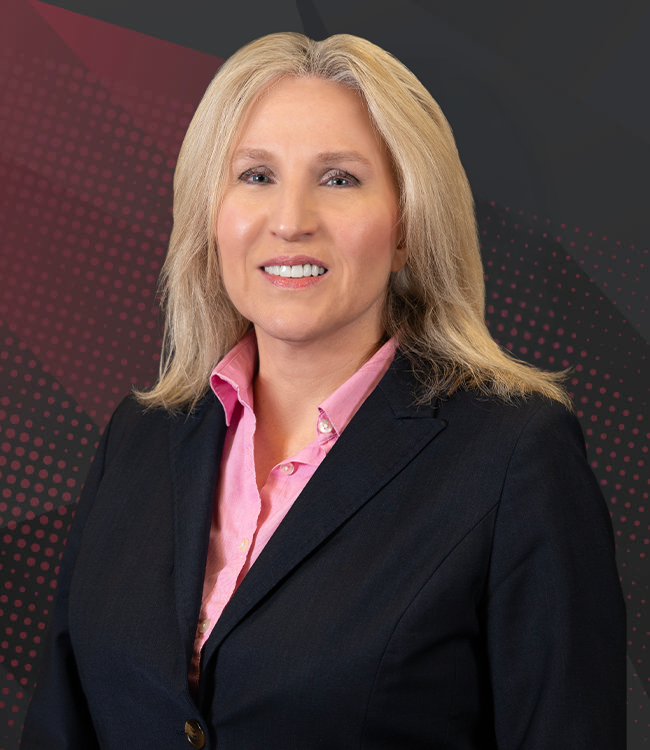
- Noah T. Melissa A. Scartelli
Founder & President
Melissa A. Scartelli
Founder & President
Melissa is a respected Pennsylvania trial attorney, firm founder, and board-certified civil trial advocate recognized for compassionate client service, major case results, and longstanding Super Lawyers honors. Deeply active in the legal community and local institutions, she continues to champion injured clients alongside her family-led legal team.
After an accident, who you hire matters. We've spent years fighting for families just like yours – and we're ready to fight for you.

Wilkes Barre Office (Appointment Only)
Scartelli Olszewski, P.C.
7 Public Square
Wilkes-Barre, PA 18701